
General Guide
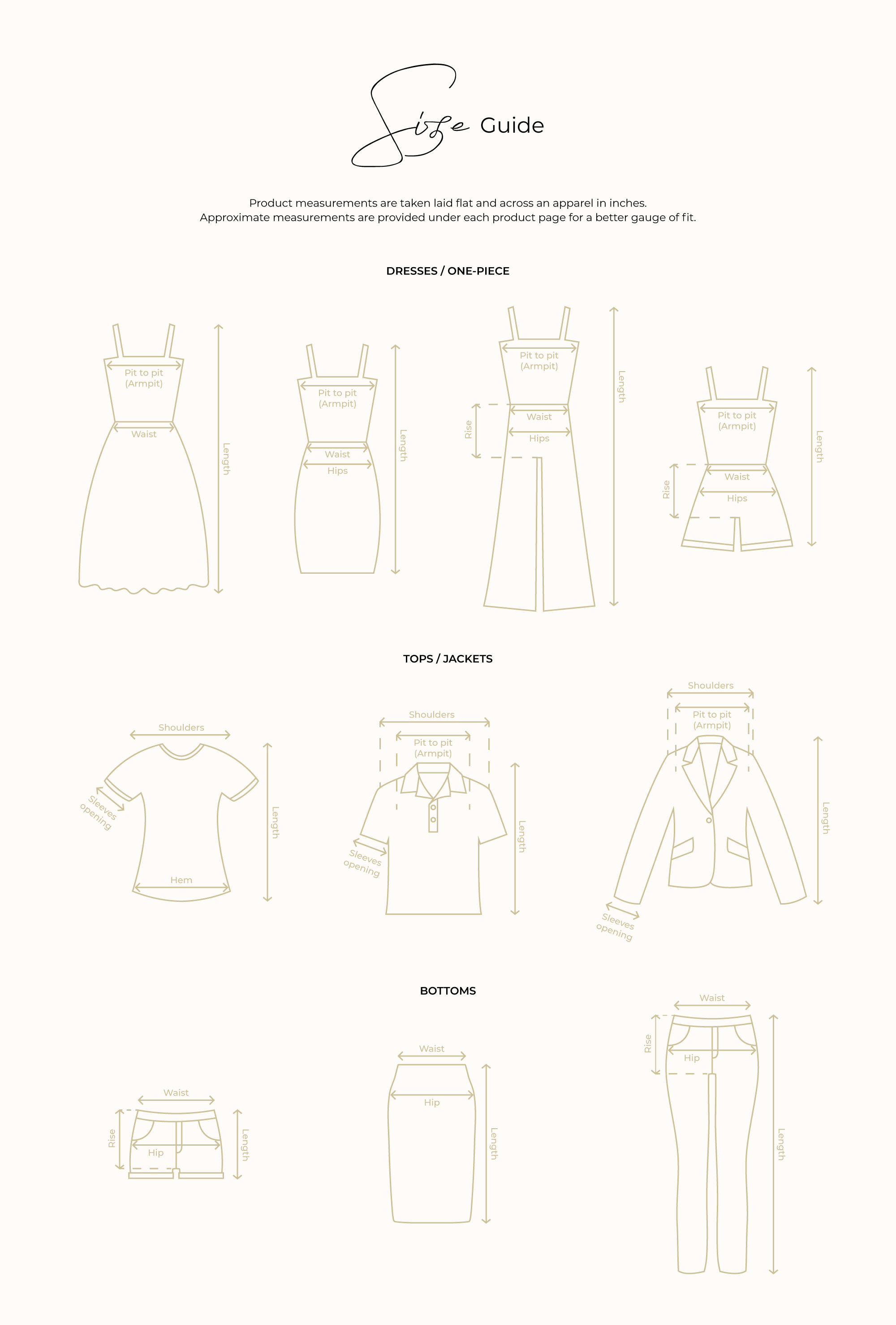
Measurements are taken across an apparel at respective areas. Multiply by 2 for circumference measurements. Range in measurement reflects the material stretch, with the smallest approximate measurement taken when an apparel is laid flat and unstretched, and the largest approximate measurement is taken when an apparel is stretched to its maximum. We do not recommend using the maximum stretch measurement as reference as some allowance is required for comfort and movement.
How to take measurements
When measuring apparels, we recommend laying the item completely flat and measuring just across the respective area. However, when measuring your body, we recommend measuring the whole circumference and then divide by 2 to compare with the product measurements.
- PTP Measurement: measure the whole circumference of your armpit area (above bust line) and then divide by 2. Please note that PTP is NOT the same as bust which is taken across the broadest part of your chest.
- Waist Measurement (for dresses): Measure the full circumference of the smallest part of your waist above the belly button, then divide by 2 to get the across measurement.
- Waist Measurement (for bottoms): Measure the full circumference of the part of your waist where the bottom is intended to sit (e.g. high-waist, mid-waist, or low-waist), then divide by 2 to get the across measurement.
If you are more comfortable with cm measurements, you may use any inches to cm converter online to give you a better gauge.
To gauge your size, you may also measure a piece of apparel you have in a similar cutting to the one you are purchasing and compare it against our measurements to see which size fits you best.
Our Size Recommendation Chart (Based on Body Measurements)
Our Size Recommendation Chart is designed to help you choose the most suitable size based on your body measurements and intended fit, rather than the garment’s actual flat measurements.
Each size listed reflects the body measurements that the piece is intended to fit comfortably. Please note that due to variations in fabric stretch, cutting, and design structure (such as thicker waistbands, structured bodices, side zips or non-stretch materials), the actual garment measurements may differ slightly from standard sizing expectations.
For certain designs, you may find that a slightly larger or smaller body measurement is recommended to achieve the best fit and support (for example, a more secure fit for tube styles or added ease for less stretchable fabrics). These adjustments have already been taken into account in our sizing recommendations.
As fit preferences vary from person to person, this chart serves as a general guide. We encourage customers to consider their preferred fit—whether snug or relaxed—when selecting their size.
For any further enquiries regarding sizing, please email us at enquiry@TheThreadTheory.com.